
Balancing YTT with Work and Everyday Life
Finding Your Rhythm in a Fast-Paced City
Life in Singapore moves quickly. Between full-time work, personal commitments, and a never-ending list of to-dos, adding a Yoga Teacher Training (YTT) into your schedule might feel like a lot to take on.
But balance doesn’t mean having more hours in the day; it’s about how you use them. Learning to manage that balance during YTT often becomes one of the most valuable lessons you take away, both on and off the mat.
1. Adjusting to a New Routine
When training begins, it can take a few weeks to find your rhythm. Long weekends or weekday sessions can feel intense, especially if you’re used to spending that time resting or catching up with friends.
Staying organised makes a big difference. Plan your week ahead, simplify your meals, and avoid stacking your social calendar too tightly. Build rest into your schedule as intentionally as study time. It’s not a luxury but a necessity for focus and recovery.
Even small adjustments, like pre-packing meals or choosing early nights before full training days, can help you conserve energy. In a city that thrives on constant motion, pacing yourself is key.
2. The Power of Peer Support
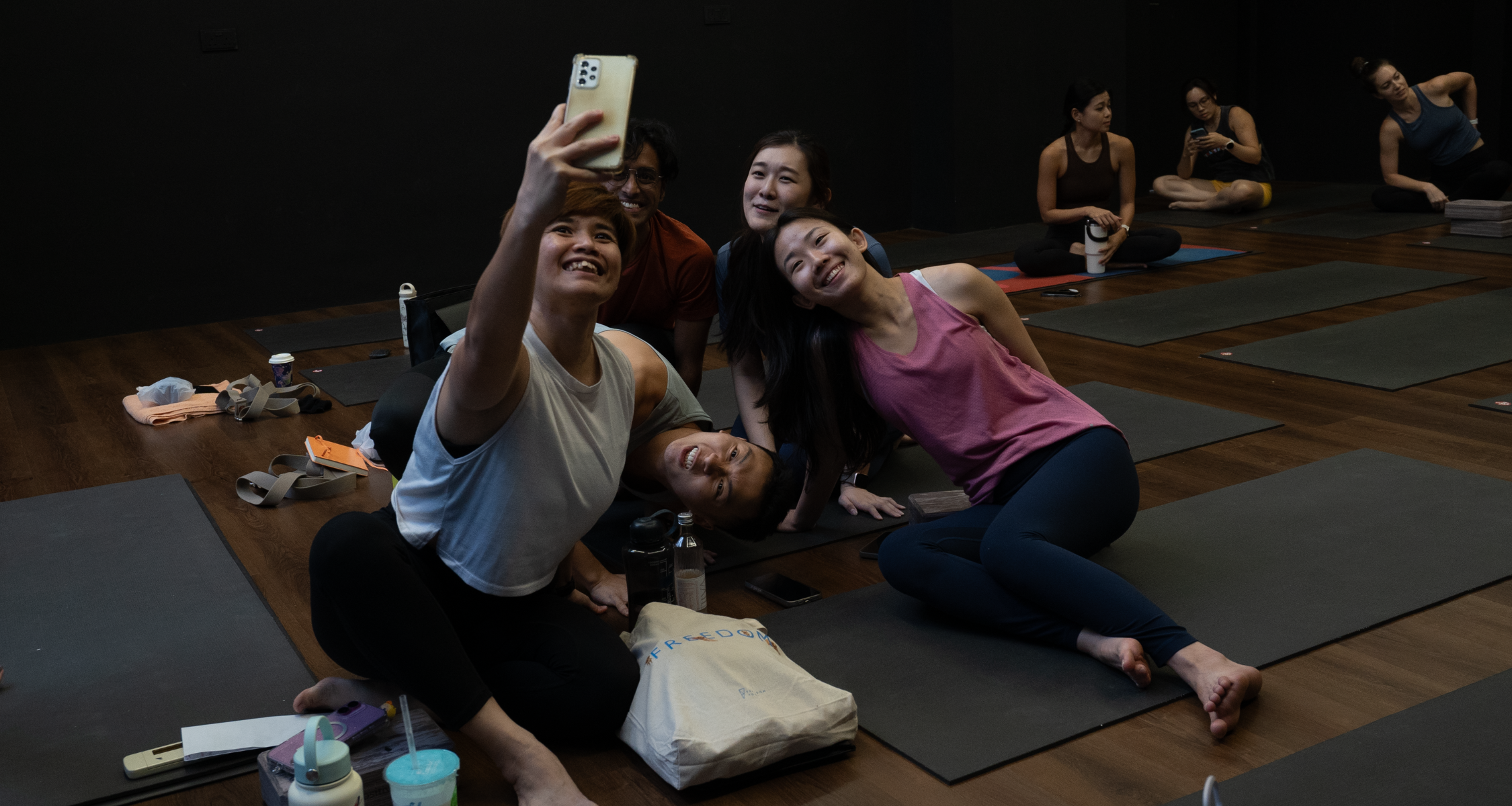
One of the most underrated resources in YTT is your batchmates. Everyone brings unique strengths; one may excel in alignment, another in anatomy, another in cueing or sequencing.
Teaching and helping one another reinforces understanding on both sides. When you explain a concept or guide a classmate through a pose, you’re also clarifying your own knowledge.
This environment of exchange not only accelerates learning but makes the long days lighter and more enjoyable. Batchmates often become accountability partners, motivators, and lifelong friends. The kind of support that helps you sustain your energy across weeks of study and practice.
3. Keep Practising Outside of YTT
Much of your growth happens beyond scheduled sessions. Revisiting what you learned in class during your own practice helps it settle physically, mentally, and conceptually.
You don’t need to replicate entire sequences. Even revisiting a few key poses or cues from the week helps strengthen memory and confidence. This habit also prevents the feeling of being “behind” when new material builds on earlier lessons.
If you train at a studio, attending regular classes can help bridge what you’re learning in YTT with how it feels in a real group setting. Try to observe different teaching styles and notice what resonates with you, whether it’s tone, pacing, cue clarity, or sequencing flow. These observations often shape your own teaching voice later on.
At Freedom Yoga, YTT students receive unlimited access to in-studio classes throughout their training. This allows trainees to stay consistent with practice. We also recommend instructors whose classes are especially valuable for new YTT students, giving them the chance to experience different teaching perspectives in a supportive environment.
4. Tough Love: Discipline and Dedication
YTT takes work. It’s not something you can cruise through passively. There will be weekends when your body feels tired, your mind feels full, and your motivation dips. That’s normal.
Discipline isn’t about being perfect every day; it’s about showing up even when you don’t feel like it. It’s the willingness to take notes when you’re sleepy, to revisit poses you find frustrating, or to review anatomy diagrams one more time before bed.
YTT is demanding because teaching others safely and effectively requires more than enthusiasm. It requires understanding, consistency, and self-accountability. But the reward is worth it. The discipline you build through the process becomes a foundation for your growth, on and off the mat.
5. Sounding Out When Things Get Tough
Balancing work, life, and YTT is rewarding, but it’s also human to hit rough patches. When that happens, speak up early.
Sounding out to your trainer isn’t a sign of weakness; it’s a sign that you’re taking ownership of your experience. Everyone has commitments outside the studio, and some seasons of life will naturally be heavier than others.
A good YTT program understands that trainees are people first. While the curriculum provides structure, trainers are there to guide, not enforce. Their role is to help you find balance, not add pressure.
6. Redefining Balance
Balance isn’t static. Some weeks you’ll be fully in tune; others might feel chaotic. What matters is adaptability, and giving yourself permission to do your best even if it looks different from one week to the next.
Many graduates say that learning to balance YTT with work was one of the most rewarding parts of their journey. It built patience, discipline, and self-awareness—qualities that ultimately shaped their teaching and practice long after the course ended.
Final Thoughts
Pursuing YTT in a bustling city like Singapore is no small feat, but it’s entirely possible with structure, support, and self-discipline.
Lean on your peers. Practise consistently. Ask questions, even when you think they’re small. And remember, balance isn’t about perfection; it’s about presence.
To learn more about our training approach, visit our 200-hour Yoga Teacher Training, or read How to Prepare for Your Yoga Teacher Training for more insights before you begin.