
Why Learning to Teach a Full 60-Minute Class Matters
Stepping Into the Front of the Room
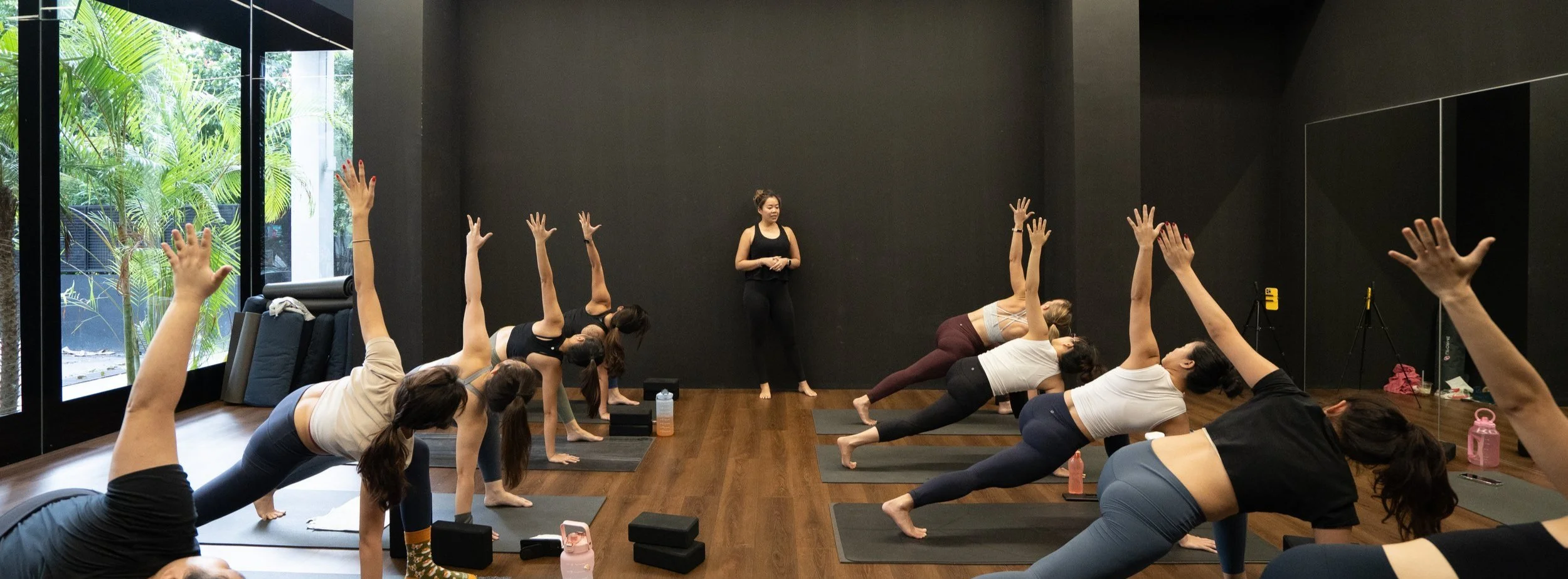
Imagine standing at the front of a yoga class for the first time.
The mats are laid out, the lights are soft, and a quiet anticipation fills the room. You guide the first breath — and for the next hour, you’re responsible for leading every movement, every transition, and every moment of silence in between.
That’s what it means to teach a real class. It’s not about memorising a sequence, but managing energy, focus, and flow from start to finish. And that’s why understanding how to lead a full 60-minute class is such an essential skill for every yoga teacher.
The Reality of Real-World Teaching
In most yoga studios, 60 minutes is the standard class duration. It offers enough time to build a complete practice — from gentle warm-ups to peak poses and savasana — while still fitting into the rhythm of a busy schedule.
Teachers who can confidently lead for a full hour understand how to pace sequences naturally, sustain focus, and create a balanced journey for their students. These are the skills that carry over into real-world teaching and professional readiness.
The Gap Between Training and Reality
However, not all Yoga Teacher Trainings (YTTs) reflect this standard. Some programs assess trainees through shorter, 30-minute segments, often for logistical convenience, easier scheduling, or to reduce training costs.
While this can make training more efficient from an operational perspective, it often comes at the expense of the student experience. The ones who lose out are the trainees themselves — individuals who commit their time, energy, and finances with the genuine intention to become capable, confident teachers.
Without the chance to practise managing a full-length class, many graduates find themselves underprepared for the pacing, focus, and time management that a real 60-minute class demands.
Why 60 Minutes Builds True Teaching Confidence
Learning to lead a full-length class develops much more than endurance. It teaches pacing — how to transition naturally between poses, how to balance effort and recovery, and how to guide breath consistently throughout.
The ability to hold attention for an hour also strengthens classroom management and adaptability, both essential for teaching in live environments where students’ needs and responses vary.
From a professional perspective, mastering 60 minutes is practical, too. A teacher comfortable with a full class can easily adapt to a 45-minute express format or stretch to a 75-minute workshop. But the reverse isn’t as simple; moving from 30 to 60 minutes can feel like learning to teach all over again.
Building Up to the Full Class Experience
Some YTTs recognise this gap and design their training to ease students into the process — starting with shorter practice teaching segments before progressing to a full 60-minute class for final assessment.
This approach ensures trainees gain both gradual exposure and real-world readiness. It blends the confidence of early success with the complete experience of managing an entire class on their own — an invaluable skill for anyone intending to teach professionally.
Final Thoughts
Yoga teaching isn’t just about learning poses or memorising sequences — it’s about guiding an experience from beginning to end. The 60-minute format remains the most universal measure of readiness for teaching in studios.
Freedom Yoga’s 200-hour YTT trains its graduates to lead a full 60-minute class confidently and safely, equipping them with skills that reflect real-world studio expectations.
Learn more about the Freedom Yoga 200-Hour Yoga Teacher Training.